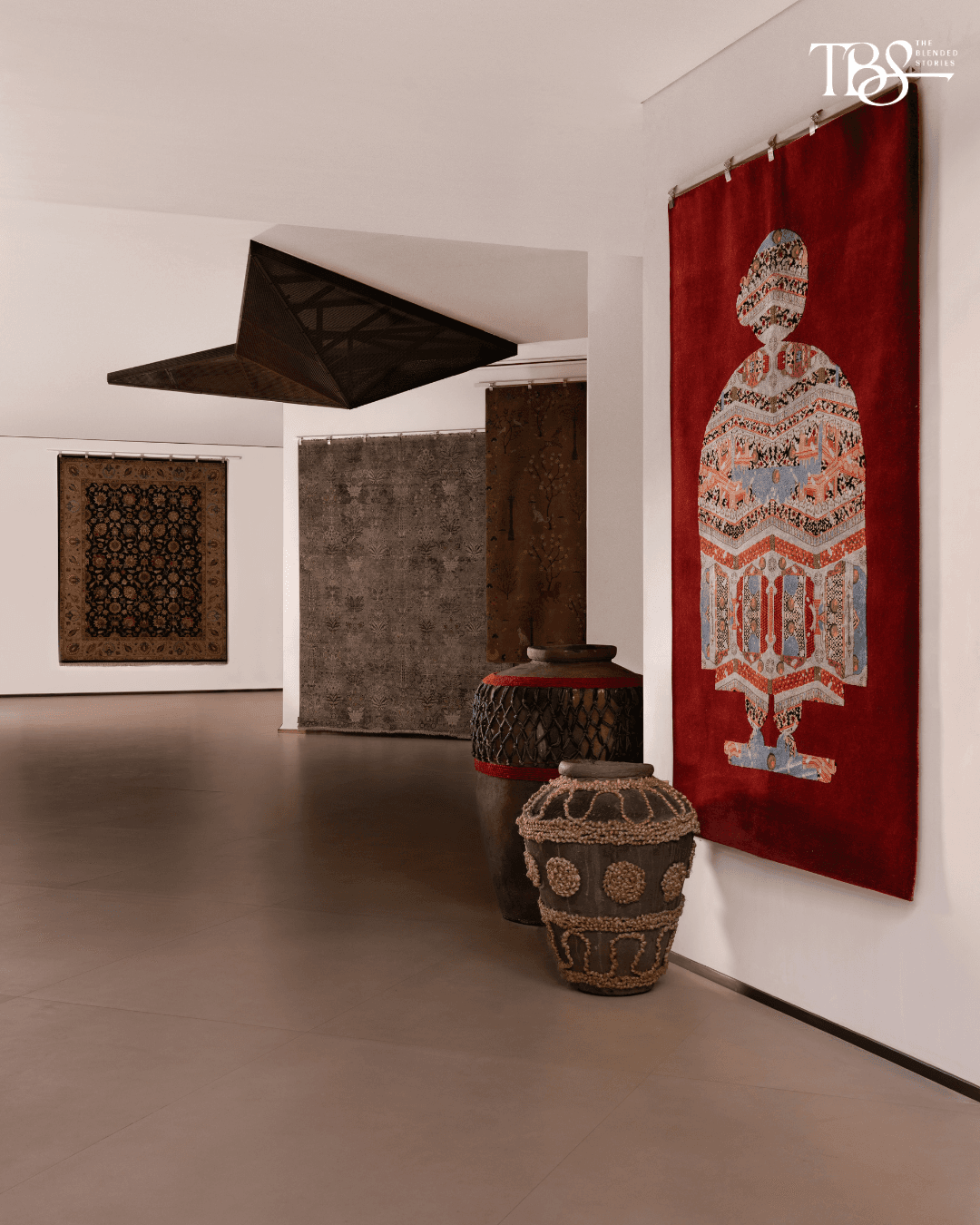
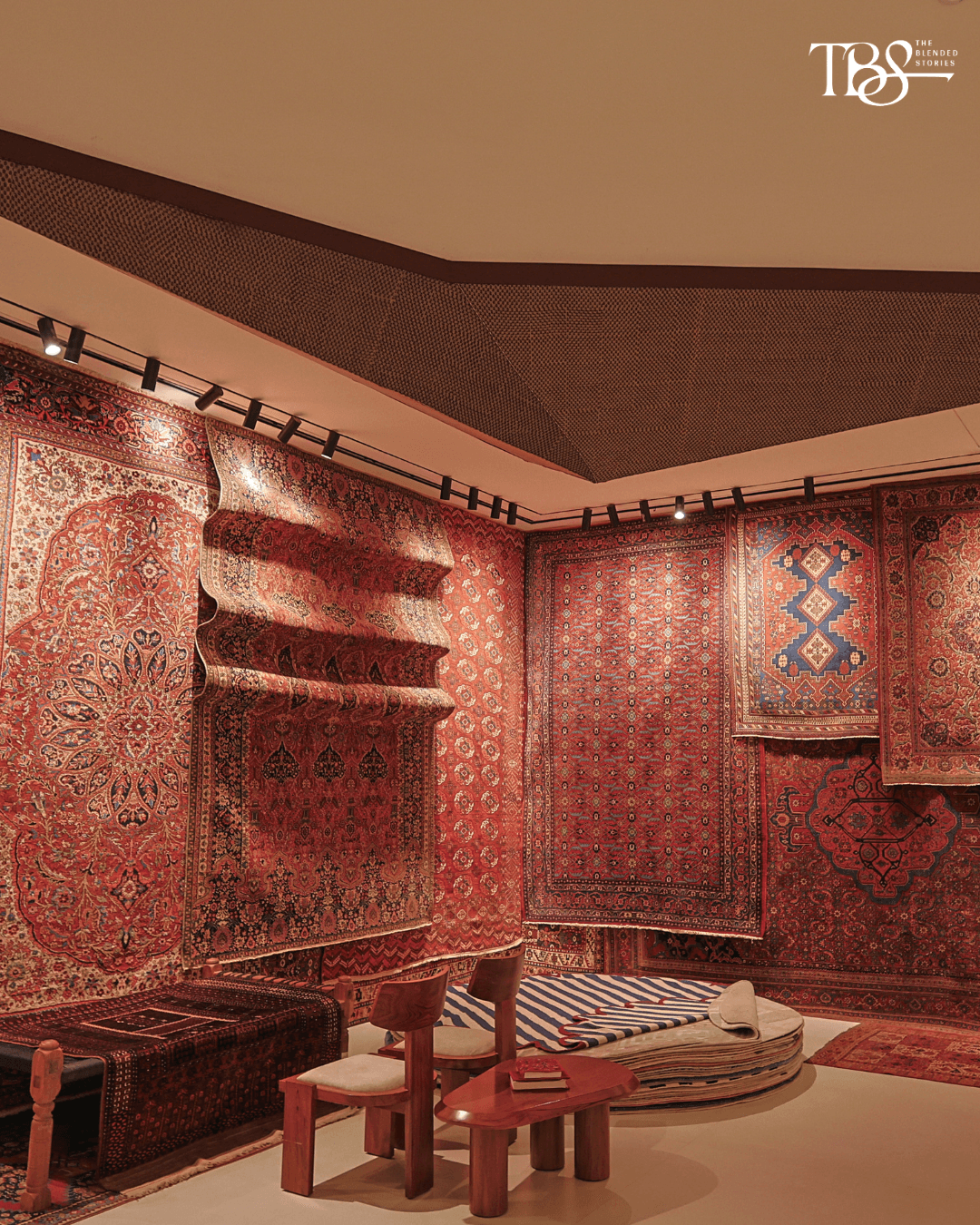
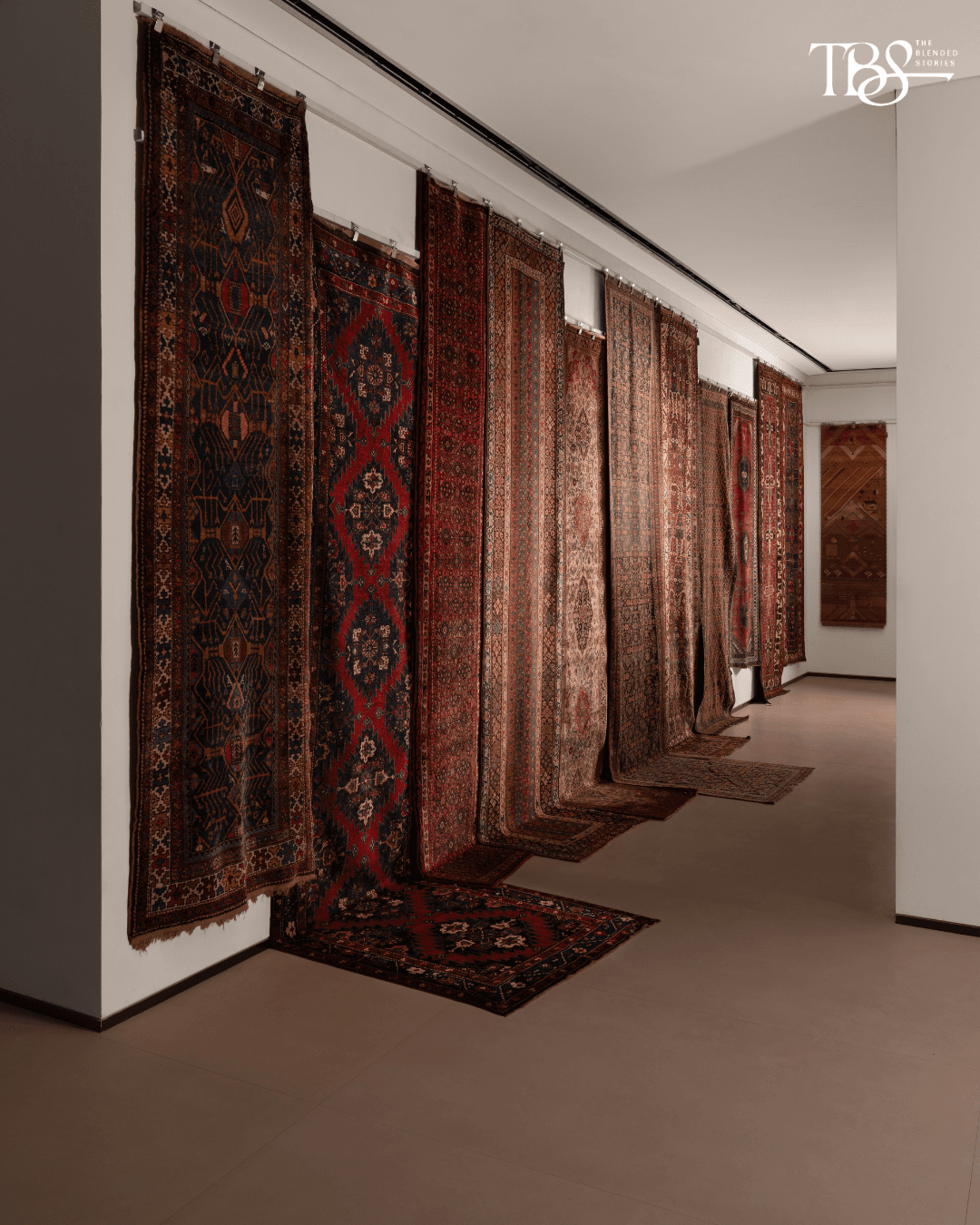
THE RUGS DON’T STAY ON THE FLOOR.
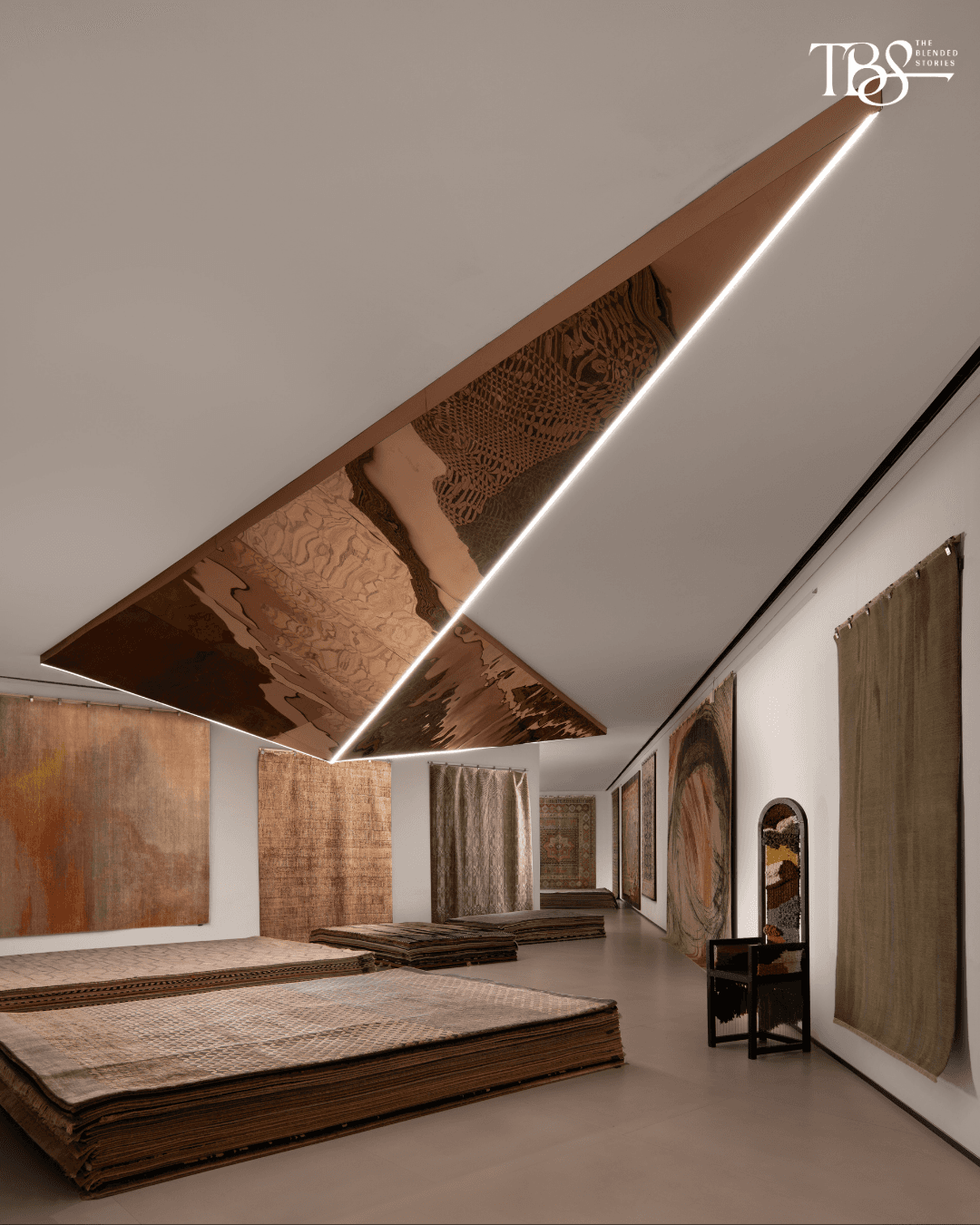
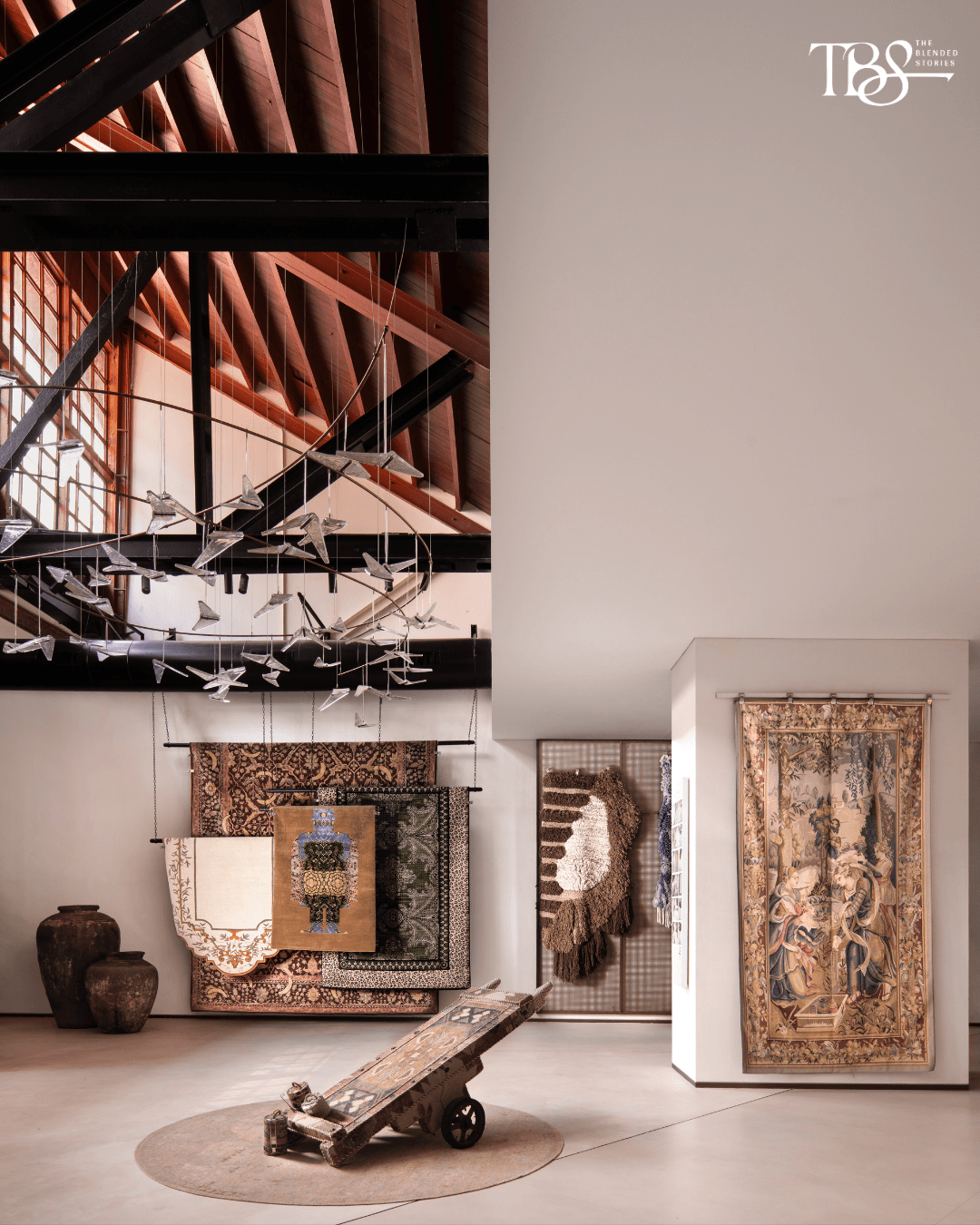
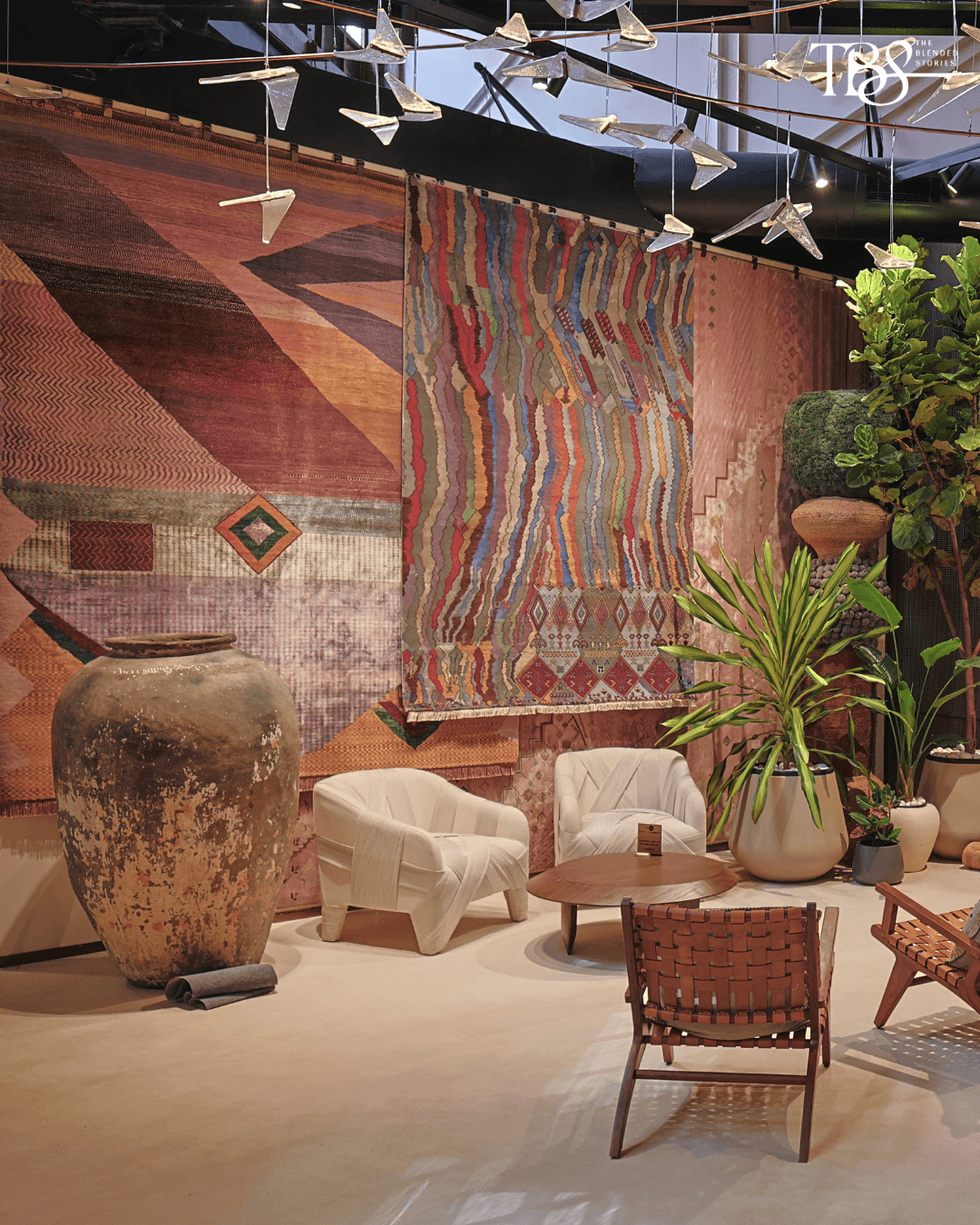
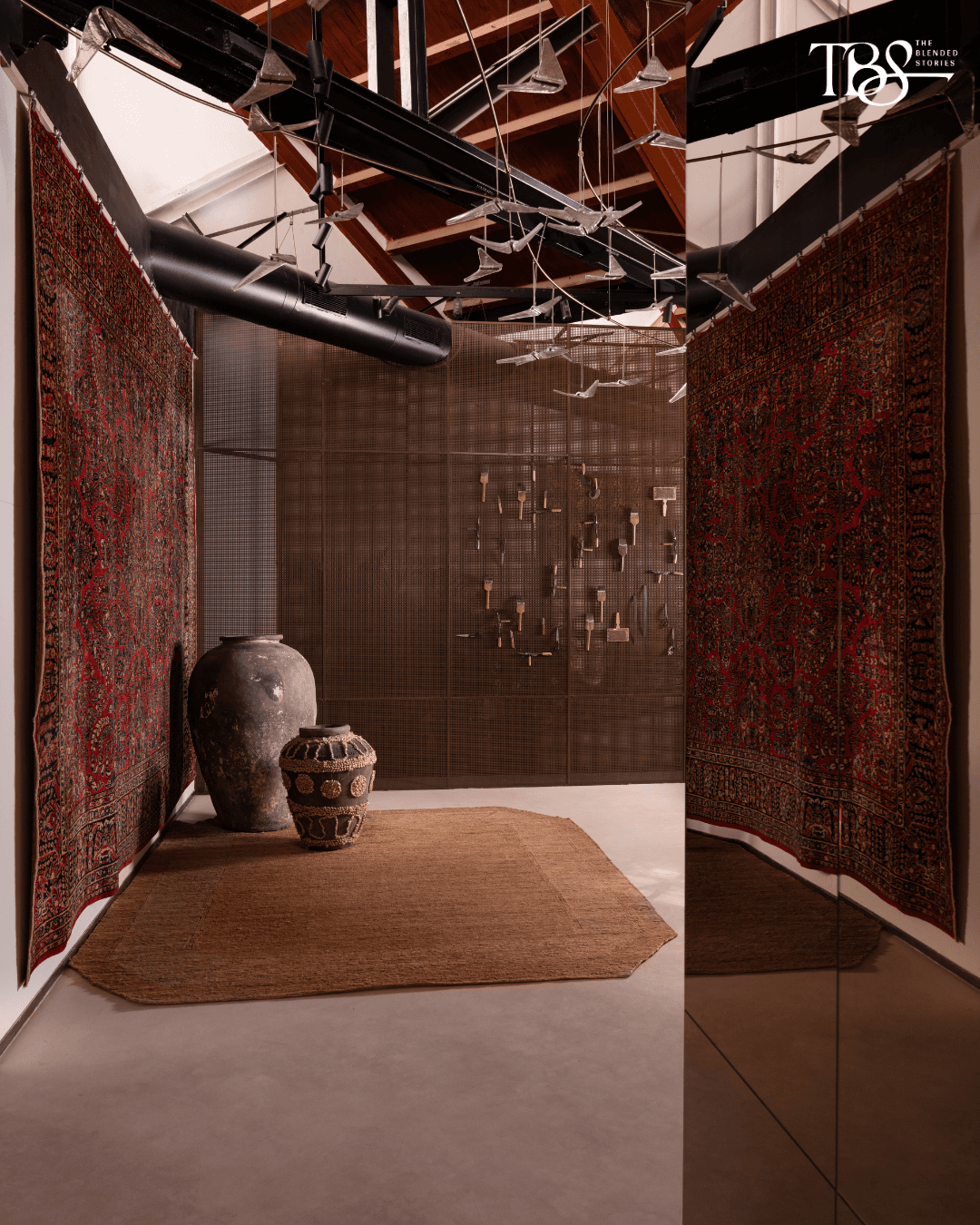
You look up and see that they climb the walls.
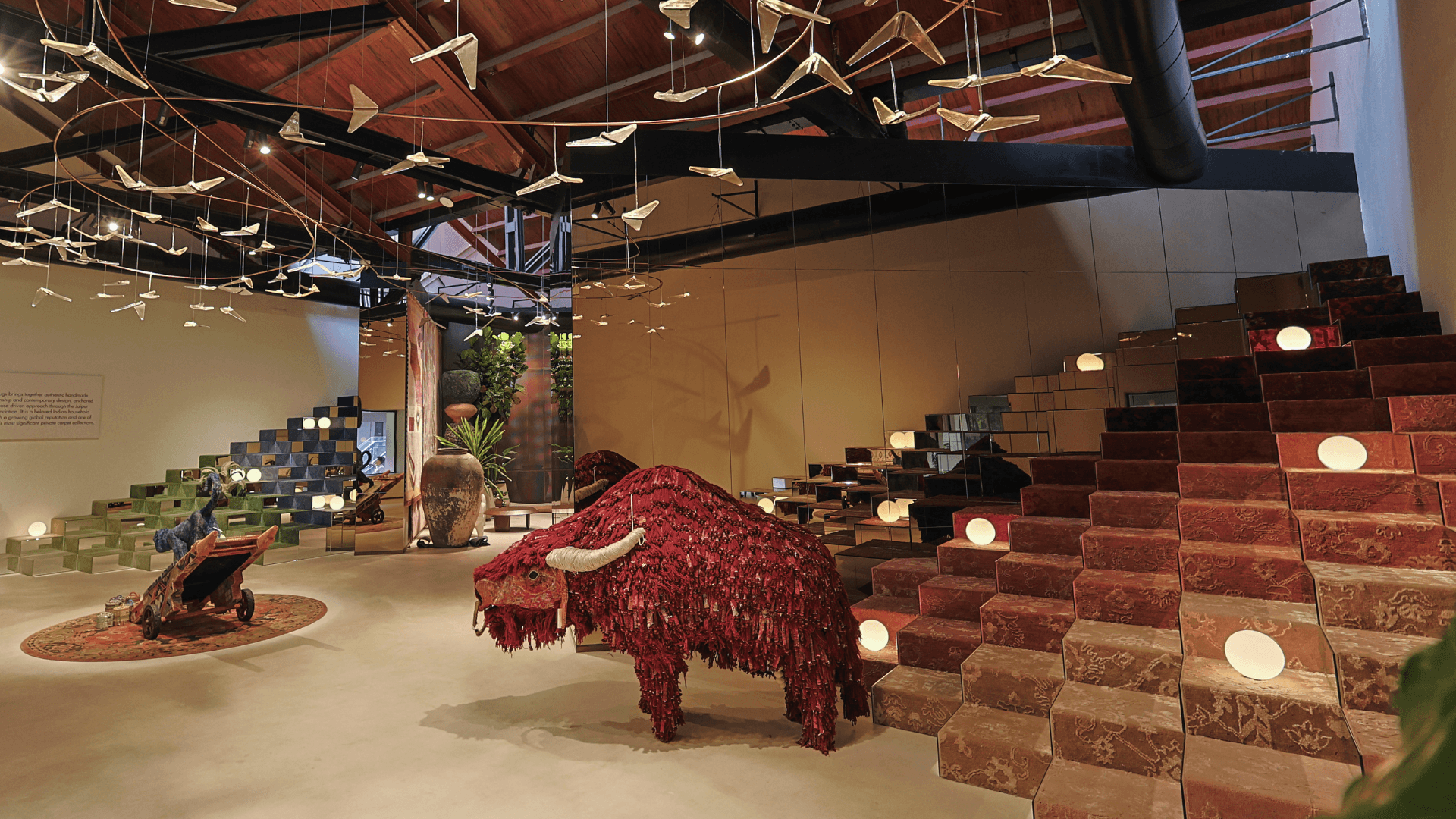
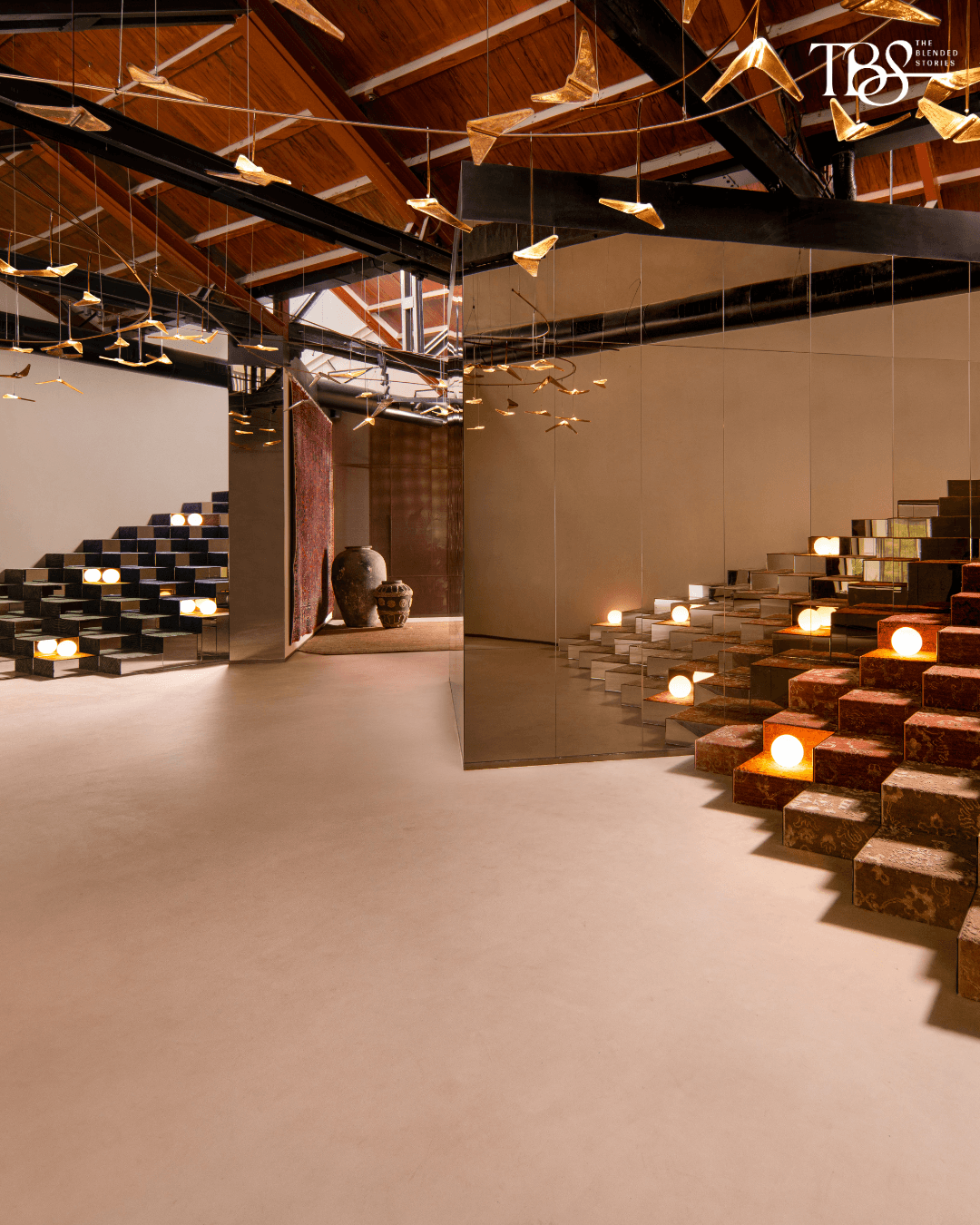
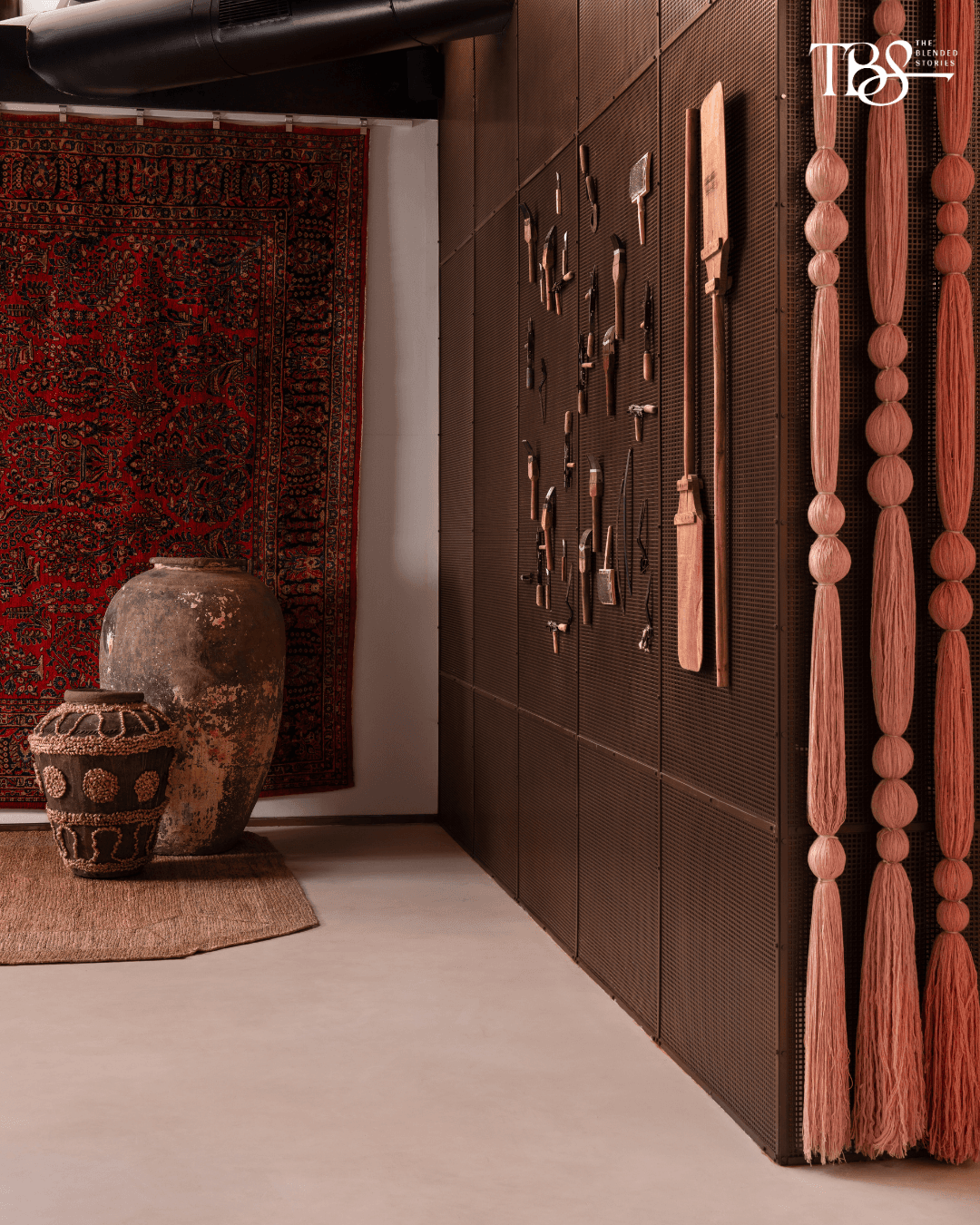
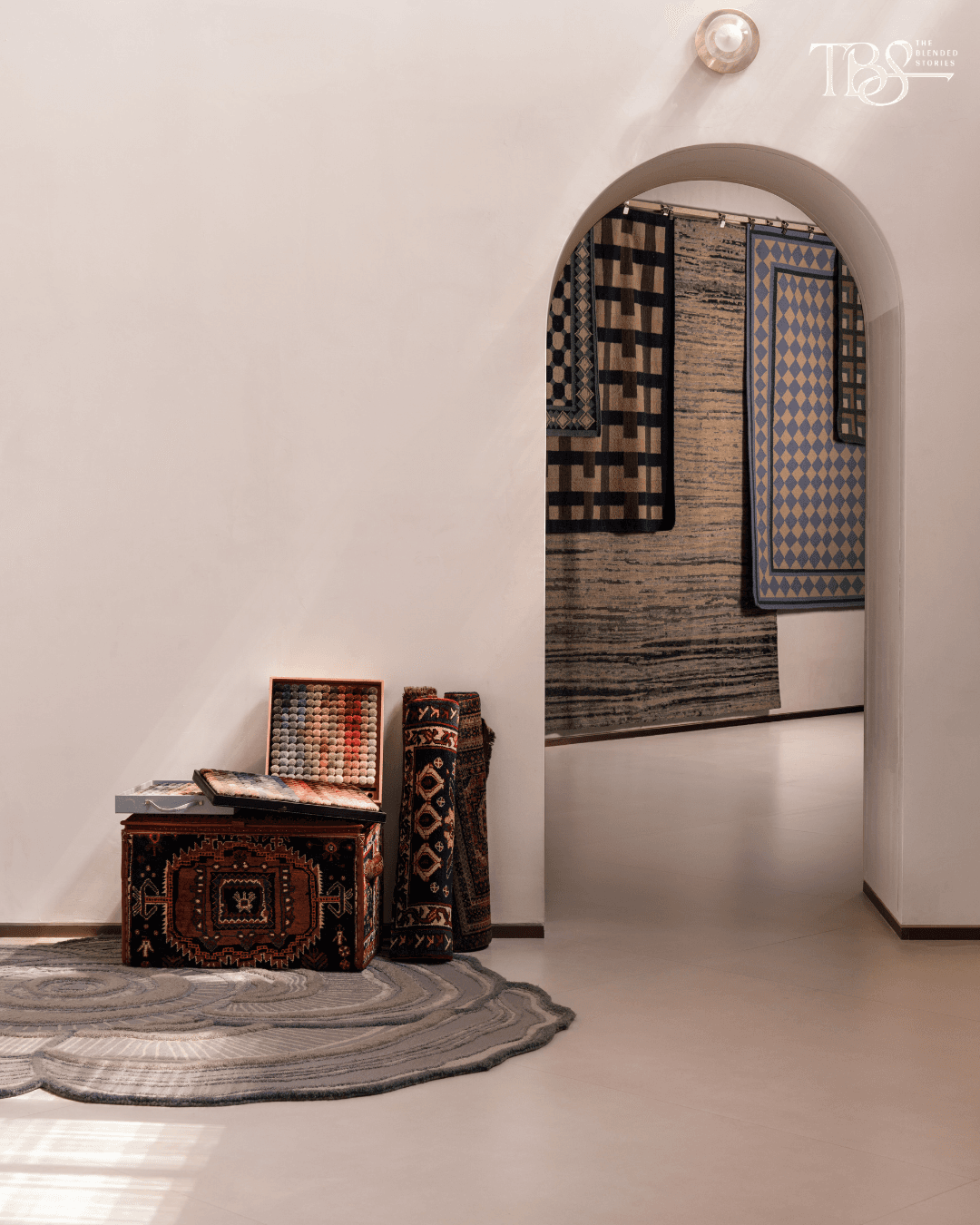
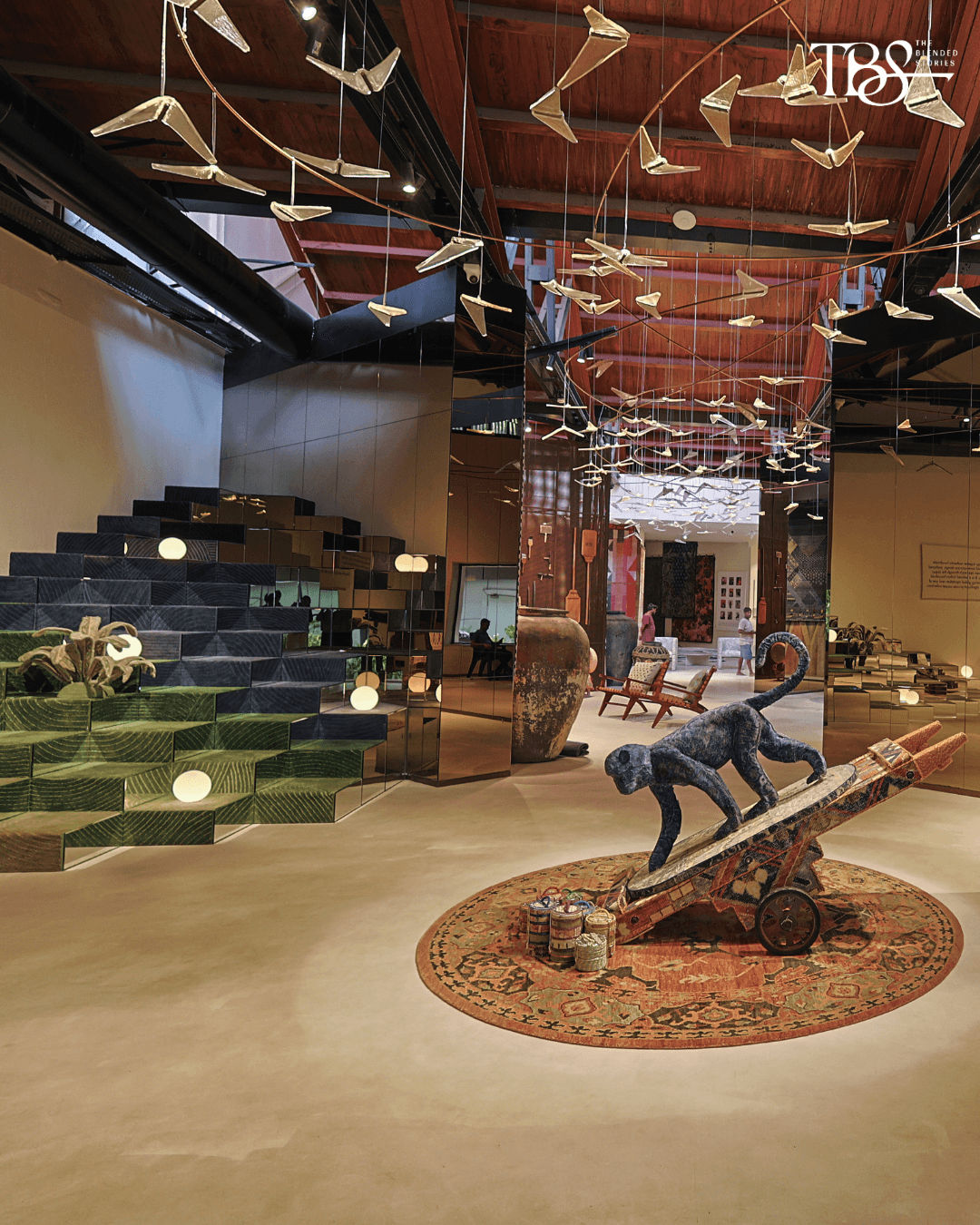
The rugs began to feel less like objects waiting to be bought when displayed vertically across the scale of the old mill and feel more like progressing archives of Indian weaving. The Traditional techniques aren't hidden behind walls or glass but the sit comfortably alongside contemporary design new collaborations and pieces made for homes now.
And perhaps that is what makes the space work. It doesn’t ask craft to choose between preserving its past and participating in the present.
THE PEOPLE BEHIND THE RUGS ARE PART OF THE STORY.
Jaipur Rugs works with artisan communities across India, which make the distance between the maker and the eventual owner disappear
When you watch a rug being made you can not just think of it as another finished product. You notice the details like the repetition of patterns, the precision and the time involved and more importantly the person making it.
Because sometimes knowing who made something changes the way you value it.
IMAGE CALLOUT: An artisan weaving inside the Mumbai flagship, with the loom, yarn and work-in-progress visible.